
Appleton, WI · Garage Door Service
Garage Doors in Appleton Built Before Insulation Codes Existed
Appleton homes built 1945-2008 often have garage doors with no insulation rating, a real problem once Wisconsin's cold winters hit. Here's what that means for your door.
- Repairs & new doors
- Springs & openers
- Serving 4 nearby communities
What Most People Get Wrong
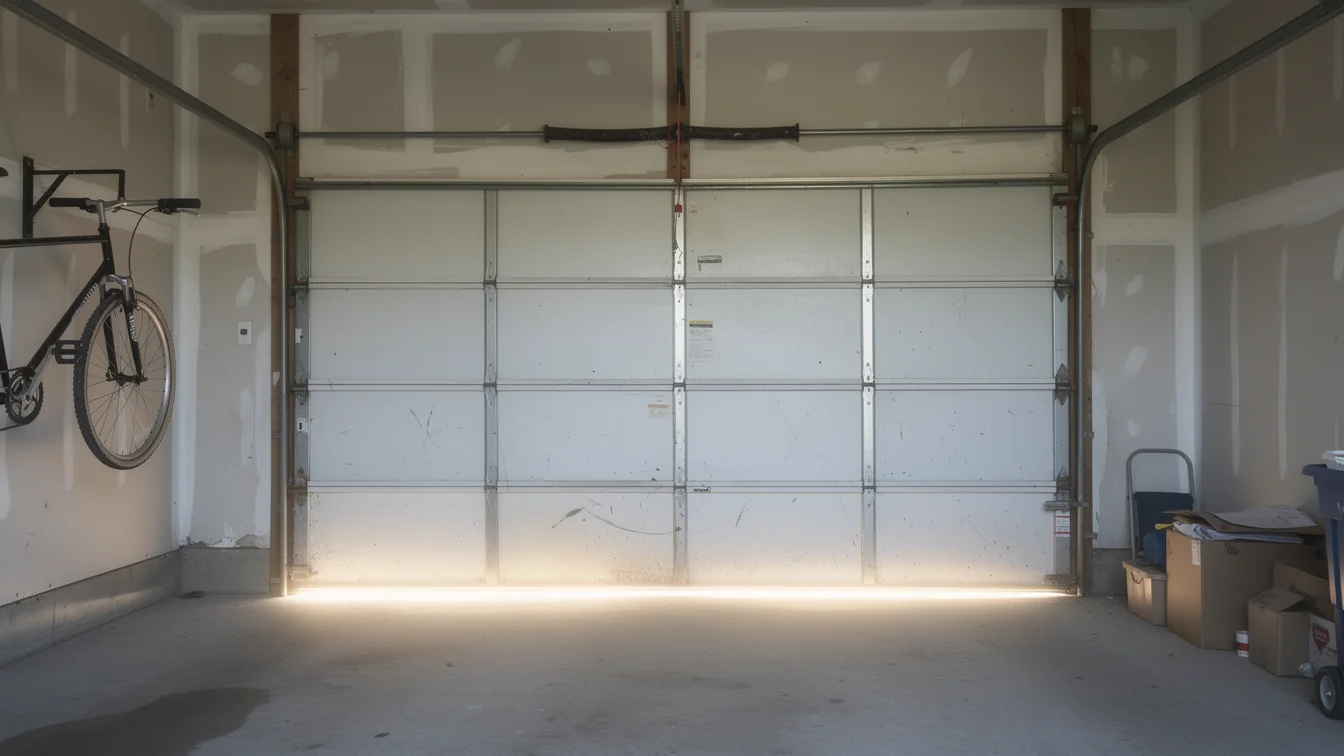
Most people think a drafty garage just needs new weatherstripping. The seals matter, but here's what's really going on in Appleton: the door panel itself, the steel skin, often has nothing behind it. Houses in this area were built mostly between 1945 and 2008, with the median landing around 1980 - right before insulated steel doors became standard practice. A door from that era is usually a single layer of steel with an air gap, no foam core, no thermal break. Swapping the bottom seal or adding a new opener doesn't touch that problem. If your garage feels like an icebox no matter what you do to the trim, the door itself is probably the gap, not the gasket around it. Replacing a seal on an uninsulated panel is a ten-minute fix that solves maybe a quarter of the draft. The rest is the steel.
The Situation
Across the 39 named areas this crew covers, the housing stock skews heavily toward 1980s and 90s construction, not the newer builds people picture when they think 'insulated door.' With 51,218 owner-occupied houses across this service area, a large share of them fall squarely inside that pre-insulation-code build window. That's not a small pocket of old homes - it's the majority pattern. A door that matches the house's original construction date is, more often than not, uninsulated or minimally insulated, built to a spec that predates the energy codes most buyers assume apply today. When a homeowner calls asking why their energy bill jumped the first winter after they moved in, the answer is frequently sitting right there in the garage, original to the house, never upgraded since the day it went in.
What Local Conditions Do
This region sits in a cold-severe climate band, which means a steel door with zero foam core doesn't just feel drafty, it sweats and frosts on the inside face. Moist garage air hits a cold steel panel and condenses, then freezes in the panel's ribs overnight. Over enough winters that cycle works on the steel seams and the roller tracks, and it's why older uninsulated doors in this area tend to show rust at the bottom panel years before anything else on the door fails. An insulated door with a foam or polystyrene core doesn't eliminate condensation entirely, but it slows the heat transfer enough that the panel surface doesn't sit at outdoor temperature all night. That's the practical difference between the two door types here, not comfort alone but how fast the hardware wears out underneath them.
The Seasonal Bit
Cold-severe winters change how a torsion spring behaves - steel contracts, lubricant thickens, and a door that opened smoothly in October can bind or groan by January. That's true on insulated and uninsulated doors alike, so don't mistake a stiff door in February for proof you need a full replacement. Sometimes it's just old grease seizing up in the cold. One honest limit here: if the door and track are original to a house built in that 1945-1980 window, a repair can restore function but it won't add insulation that was never built in to begin with. Retrofitting foam board to a steel skin is possible but it's a patch, not a factory seal, and it won't match what a true insulated panel does at the joints. For houses in that older window, replacement is often the more honest fix once the original door is failing anyway - not because the old door was poorly made, but because it was never built to the standard this climate demands now.
Frequently asked questions
Is my garage door actually insulated?
If your house was built before the 1980s, there's a decent chance the original door is a single layer of steel with no foam core. Look at the panel edge or check for a label inside; a true insulated door has visible thickness, usually an inch or more, with a backing material. A thin, hollow-sounding panel is a sign it's uninsulated.
Why does my garage door sweat and frost in winter?
This area sits in a cold-severe climate band, and an uninsulated steel door sits close to outdoor temperature all night. Warm, moist garage air hits that cold steel and condenses, then freezes in the ribs. Insulated doors slow that heat transfer enough to cut down on it, though they don't stop it completely.
Will new weatherstripping fix a cold garage?
It helps with air leaks around the edges, but it does nothing for heat moving straight through an uninsulated steel panel. If the door itself was built before insulation was standard in this market, weatherstripping alone won't get you a warm garage. It's a partial fix, not a full one.
Related garage door services in Appleton
More garage door guides
Book garage door service in Appleton
Call now or request a quote - tell us what the door is doing and where you are.