
Appleton, WI · Garage Door Service
Openers, Power Outages, and the Appleton Housing Stock
Appleton homes built mostly in the 1980s and 90s meet cold-climate power outages differently. Here's what that means for your opener and manual release.
- Repairs & new doors
- Springs & openers
- Serving 4 nearby communities
What Most People Get Wrong
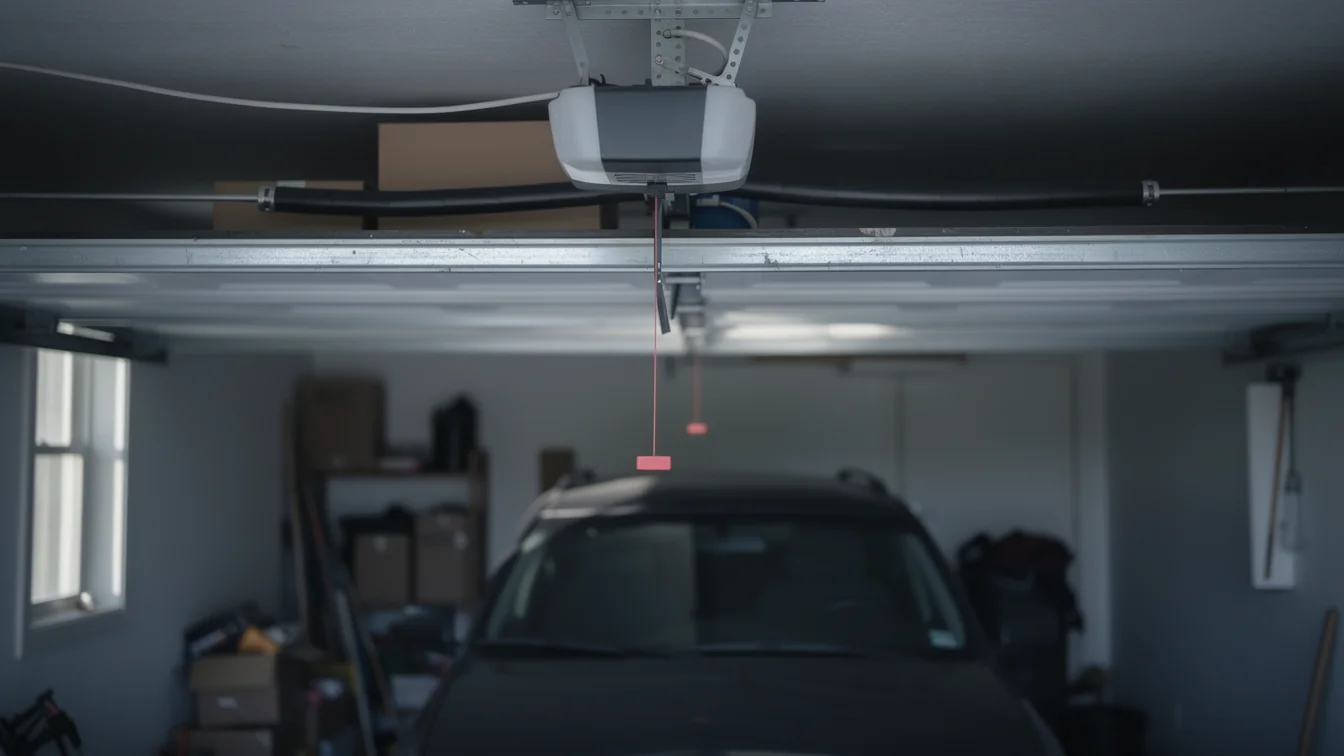
Most homeowners think a dead opener means a dead door. It doesn't - every opener has a manual release cord, and every door still moves by hand once that cord is pulled. The mistake we see across this area is people assuming the opener IS the door, then panicking when the power drops and the car's stuck inside.
The bigger issue in a service area where houses mostly date to the 1980s and 90s is what's actually attached to that opener. A chain-drive unit from the Reagan era, bolted to a header that's flexed for three decades, doesn't fail the same way a 2015 belt-drive does. The gears strip. The sprocket wears oval. When the power comes back, the opener hums and the door doesn't move - and that's not a power problem, that's a thirty-year-old gear problem that the outage just happened to expose.
The other thing people get wrong: assuming a battery backup fixes everything. It runs the opener. It does not run a frozen track or a spring that's already lost tension from cold. Backup power buys you cycles, not a working door if the hardware underneath is already failing.
The Situation
With housing built between 1945 and 2008 and most of the stock concentrated in the 1980s and 90s, a lot of openers out there are original or close to it - units that predate any battery-backup requirement and were never built to expect an outage. When the power goes, those openers don't fail safe. They just stop, mid-cycle sometimes, and the only way in or out is the manual release.
That matters more here than in a newer subdivision. A house built in 1988 has had three decades of header settling, track shifts, and spring cycles. Add a power outage on top of hardware that's already marginal, and the manual release - a part most owners have never touched - becomes the only thing standing between you and a stuck car.
We don't sell whole-home generators and we don't install transfer switches; that's electrical work outside what we do. What we do is make sure the opener itself has a working release, and that the door behind it isn't relying on a spring or cable that was already due for replacement before the lights went out.
What Local Conditions Do
This is a cold-severe climate zone, and that changes how an outage plays out mechanically, not just electrically. Cold doesn't just slow a motor - it stiffens the torsion spring, thickens old grease in the rollers, and makes the whole system work harder for the same lift even before you lose power.
So when a power outage hits during a cold snap, you're not dealing with one problem, you're dealing with two stacked on top of each other: no power, and a door that was already fighting its own hardware to open smoothly. On a house with original 1980s-era springs, that combination is often what finally snaps a spring rather than just flagging a weak one.
This is also why we tell people the manual release cord matters more here than it does somewhere mild. Pulling a release on a door with stiff, cold-contracted cables and a spring near the end of its life is a different job than pulling it on a door that's been serviced. We check spring tension and cable condition as part of any opener call for exactly this reason - the outage is rarely the whole story.
The Seasonal Bit
Outages in this climate band cluster with winter weather, and winter weather is when a garage door is doing its hardest work anyway - cold-stiffened springs, ice in the track, a header that's shifted slightly over thirty-plus years of freeze-thaw. An opener failure in July is usually just the opener. An opener failure in January, on a house from this area's typical 1980s-90s build era, is more often the opener and the spring and the track all showing wear at once.
We don't carry every part for every original 1980s unit on the shelf - some older gear kits and sprockets are special order, and we'll tell you straight if a repair means a short wait rather than a same-day fix. For openers that age, replacement is often the more honest answer than chasing parts for a unit that's already outlived its expected run.
If your opener dates to when the house was built, the smart move before the next cold spell isn't a new battery backup - it's having the spring and release checked first, since that's what actually keeps the door moving once the power's back.
Frequently asked questions
If the power goes out, how do I get my garage door open manually?
Every opener has a manual release cord, usually red, hanging near the rail. Pull it down and toward the door to disengage the trolley, and you can lift the door by hand. On older torsion springs - common in this area's 1980s and 90s housing - that lift can be heavier than expected if the spring's already weak.
Does a battery backup opener fix the outage problem?
It keeps the opener running through a short outage, but it doesn't fix a worn gear, a stiff cold spring, or a track that's shifted over decades. We've seen backup-equipped openers still fail to lift a door because the hardware behind the opener was already the real problem.
Why does my opener seem worse in winter?
This area sits in a cold-severe climate band, and cold stiffens springs, thickens old lubricant, and adds resistance the motor has to overcome. An opener that struggles only in winter is usually telling you the spring or rollers need attention, not that the opener itself is failing.
Is it worth replacing an opener from when the house was built?
Often yes. Houses in this area mostly date to the 1980s and 90s, and openers from that era predate current safety reversal standards and battery-backup options. Parts for them are increasingly special-order. We'll look at the actual unit before recommending replacement over repair.
Related garage door services in Appleton
More garage door guides
Book garage door service in Appleton
Call now or request a quote - tell us what the door is doing and where you are.