
Appleton, WI · Garage Door Service
Garage Door Maintenance Built Around Appleton's Housing Stock and Climate
Seasonal garage door maintenance for Appleton, WI homes built between 1945 and 2008, tuned for the area's severe winter climate and aging torsion hardware.
- Repairs & new doors
- Springs & openers
- Serving 4 nearby communities
How It Shows Up
Most of the trouble we see starts small. A door that used to glide now hesitates an inch off the floor. The opener strains and clicks before it catches. Rollers rattle in the track on the coldest mornings, then quiet down once the garage warms up a little. None of that is random - it's what happens to torsion springs and steel rollers after years of temperature swings in a region that sits in a severe cold climate band. Steel contracts in the cold and expands in the summer humidity, and that constant flex is what wears out lubrication, loosens hardware, and throws tracks out of alignment faster than in milder parts of the country. Houses in this area were mostly built between 1945 and 2008, with a lot of stock clustered around 1980, so a large share of doors are running on original or early-replacement hardware that was never rated for the cycle count it's now logged. You'll also hear it before you see it - a grinding noise on the way up, a bang on the way down, a door that drifts closed a few inches on its own. Catching these signs during a scheduled check costs a lot less than the 10pm call when a cable finally lets go.
How to Book
You can request a maintenance visit through our site at /. Tell us the age of the door if you know it and what you've noticed - noise, slow travel, a remote that's gotten unreliable - and we'll get you on the schedule. We check spring tension, lubricate rollers and hinges, inspect cables and the bottom seal, and tighten the hardware that works itself loose over a season of temperature swings. If something needs replacing, we'll tell you what it is and why before we touch it, not after. We don't upsell a full opener replacement when a sensor just needs realigning.
Why This Fails Locally
The reason maintenance matters more here than it would in a warmer market comes down to two things stacked on top of each other: the age of the housing and the climate band. A door built or installed anywhere in the 1945-2008 window, with the bulk of that stock dating to the 1980s and 90s, has steel torsion springs rated for a fixed number of open-close cycles. Cold, dense air adds load to that spring every time the door lifts, because the steel is stiffer and the counterweight calculation shifts slightly with temperature. Severe cold also hardens standard lubricant, which is why a door that moved fine in October starts groaning in January - the grease isn't doing its job anymore. None of this shows up as a single dramatic failure. It shows up as the slow degrade of rollers, cables, and spring coils that were already decades into their service life before the weather started working against them. A door that's never been serviced in a house from this era is carrying more wear than the same door would in a region without hard winters, and that's the gap a yearly check is meant to close.
Can You Do This Yourself
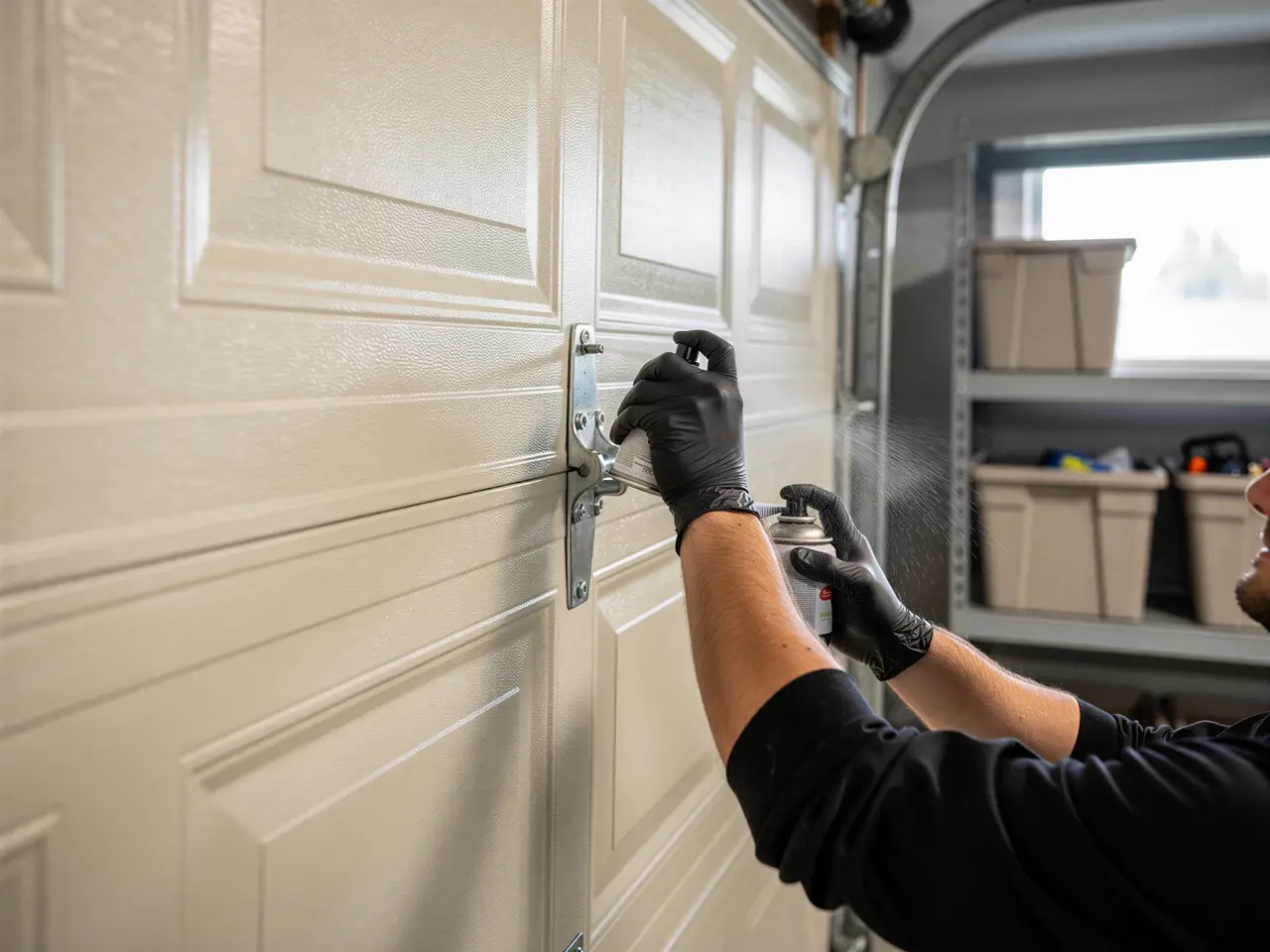
Some of this is fair to handle yourself. Wiping down tracks, checking that the bottom seal isn't cracked, and testing the auto-reverse sensor with a block of wood are all reasonable for a homeowner to do twice a year. Spraying a light lubricant on hinges and rollers (not the track itself) helps too. What you shouldn't touch is the torsion spring. It's under enough tension to cause a serious injury if it slips while you're adjusting it, and on older installations the anchor hardware itself may be fatigued in ways that aren't obvious from looking at it. If your door is original to a house built in the 1980s or earlier, treat the spring system as something to have inspected by someone who does it regularly, not something to test with a screwdriver on a Saturday afternoon.
Frequently asked questions
How often should I get my garage door serviced in Appleton?
Once a year is the baseline most doors need here, ideally before winter sets in, since cold is what accelerates wear on springs, rollers, and lubricant. If your door is original to a house built before 1990, check it more often - the hardware has already logged more cycles than a newer install.
Why does my door get noisy only in winter?
Standard grease thickens in cold temperatures and steel components contract slightly, which increases friction at the rollers and hinges. That's the grinding or squealing you hear on cold mornings. A seasonal lube and inspection usually clears it up, but repeated noise can mean a roller or hinge is actually wearing out.
Is maintenance worth it on an older door, or should I just replace it?
Depends on what's failing. If the panels, track, and opener are sound and it's just hardware wear, maintenance and targeted part replacement make sense. If the springs, cables, and opener are all original from the 1980s or earlier and showing wear together, replacement often costs less over time than repeated service calls.
Related services
Book garage door service in Appleton
Call now or request a quote - tell us what the door is doing and where you are.