
Appleton, WI · Garage Door Service
Why a Garage Door Goes Off Track Around Appleton
Appleton's housing stock and cold winters push garage door tracks out of alignment in specific ways. Here's what actually causes it and what to check first.
- Repairs & new doors
- Springs & openers
- Serving 4 nearby communities
What Most People Get Wrong
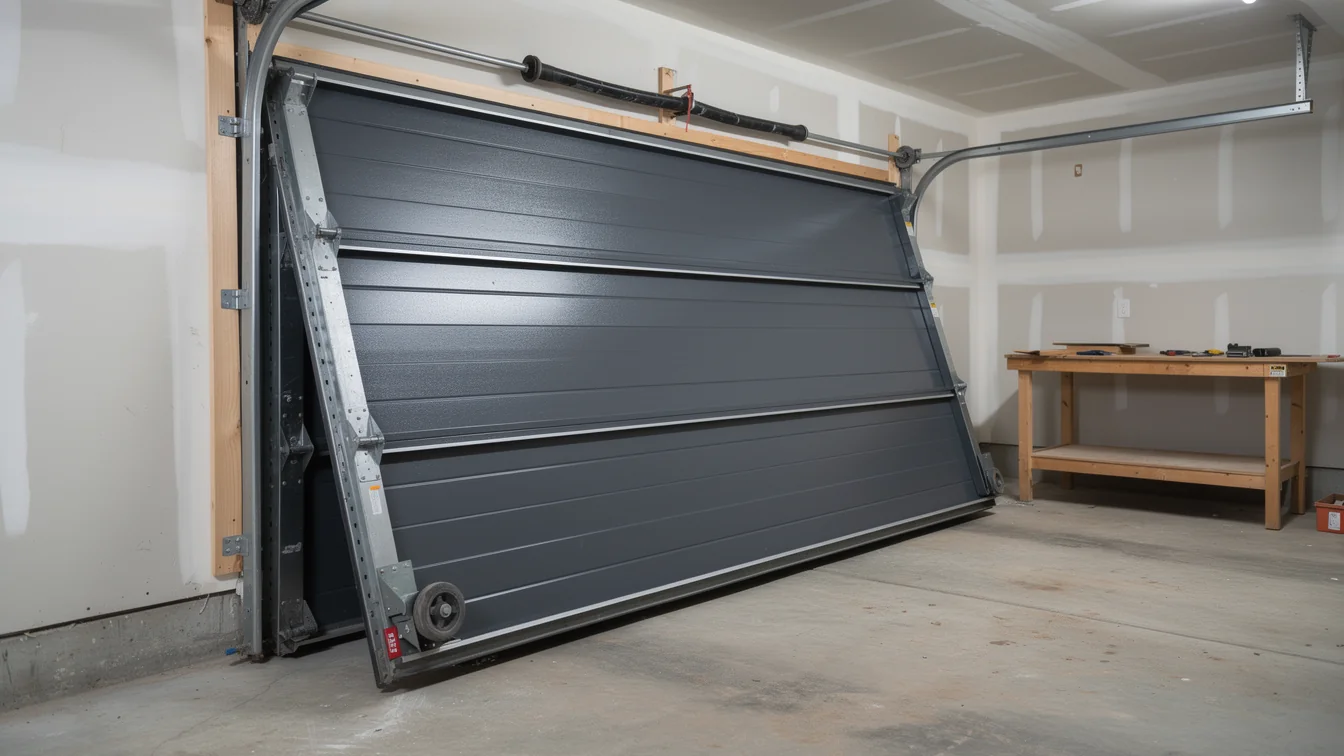
Most homeowners assume a door off its track means a bent rail, so they grab a rubber mallet and start banging. That's rarely the actual problem. On a lot of the doors we see in this area, the track is straight and the trouble is somewhere else: a roller that's worn down to the bearing, a bracket that's loosened off the jamb, or a cable that's stretched unevenly on one side. Appleton's housing stock mostly went up in the 1980s and 90s, with a median build year around 1980, and that generation of door hardware used lighter steel brackets than what goes in today. Those brackets flex a little more over forty-plus years of use, and once a bracket shifts even an eighth of an inch, the roller starts riding the edge of the track instead of the channel. That looks like a track problem from the garage floor. It isn't. Tightening the lag screws and shimming the bracket back square usually fixes it faster and cheaper than replacing track, which is the first thing a lot of guys try to sell. The honest limitation here: if the track itself is actually bent, which does happen on older single-car doors that have been hit by a car bumper over the years, no amount of bracket adjustment fixes it. That track gets replaced, not straightened.
The Situation
A good chunk of the garages we work on were built before 2008, which means the door, opener, and hardware are often original to the house or from one prior replacement round. Homes in this part of Appleton, and in nearby Kimberly, Little Chute, and Combined Locks, tend to share that same build window, so the failure patterns repeat house to house. A door that's run on the same rollers for twenty-plus winters has rollers with flat spots worn into them, and a flat-spotted roller doesn't travel the track smoothly. It hops. Every hop puts lateral stress on the track bracket closest to it. Over enough cycles, that bracket backs off the framing just enough for the door to walk sideways on its way down. We also see this on doors where the opener's travel limits were set once, years ago, and never adjusted after the spring tension changed. A door closing under the wrong tension doesn't glide into the track evenly; it drops unevenly on one side, which is often the moment a homeowner first notices the door riding crooked.
What Local Conditions Do
This area sits in a severe cold climate band, and that matters more for door alignment than people expect. Steel track and steel brackets contract in the cold. A quarter-inch gap that's invisible in July can tighten up enough in January to bind a roller against the track wall. That binding doesn't just make the door loud, it puts a sideways load on the bracket every single cycle through the winter. Combine that with a slab that's heaved slightly from frost, which is common on garages built before current footing depths were standard, and you get a door that tracked fine in fall and is grinding against one side by February. We can't fix a heaved slab. That's a concrete job, not a door job, and we'll tell you straight if that's what's actually going on. What we can do is reset the track plumb to where the door actually sits now, which buys years before the slab issue needs its own fix.
The Seasonal Bit
The worst track calls cluster in the first real cold snap and again in early spring thaw. In the cold snap, contracted steel and stiffened lubricant on the rollers mean a door that's been slightly off all year finally seizes or jumps the track outright. In spring thaw, the opposite happens: slab movement from the freeze-thaw cycle shifts just enough that a bracket which was borderline all winter finally lets go. If your door has been running a little noisy or crooked since fall and you've put off the call, this is usually when it stops being cosmetic and starts being a door that won't close at all. Catching it in the shoulder seasons, before the hard freeze or before the thaw fully sets in, is the cheapest time to get a bracket reset instead of a track replaced.
Frequently asked questions
Why does my garage door only go off track in winter?
Steel track and brackets contract slightly in cold weather, which tightens clearances that were fine in summer. If a roller or bracket was already a little loose, that contraction is often enough to push the door into binding against the track wall or walking sideways as it travels.
Is a door off its track the same as a bent track?
No. Most of the off-track calls we run are a loose bracket or a worn roller, not a bent rail. A bent track is usually obvious from impact damage, often from a car bumper, and that section gets replaced rather than adjusted.
Can I just push the door back onto the track myself?
You can sometimes reseat it, but if a cable, spring, or bracket is actually loose, it'll come off again, and a door under spring tension is not safe to force. We'd rather you call than get hurt on a DIY reset.
Related garage door services in Appleton
More garage door guides
Book garage door service in Appleton
Call now or request a quote - tell us what the door is doing and where you are.