
Appleton, WI · Garage Door Service
What We Check First on Every Appleton Garage Door Call
A tech checks age, hardware, and cold-weather wear in a set order on Appleton doors before touching anything else - here's why that order matters.
- Repairs & new doors
- Springs & openers
- Serving 4 nearby communities
What Most People Get Wrong
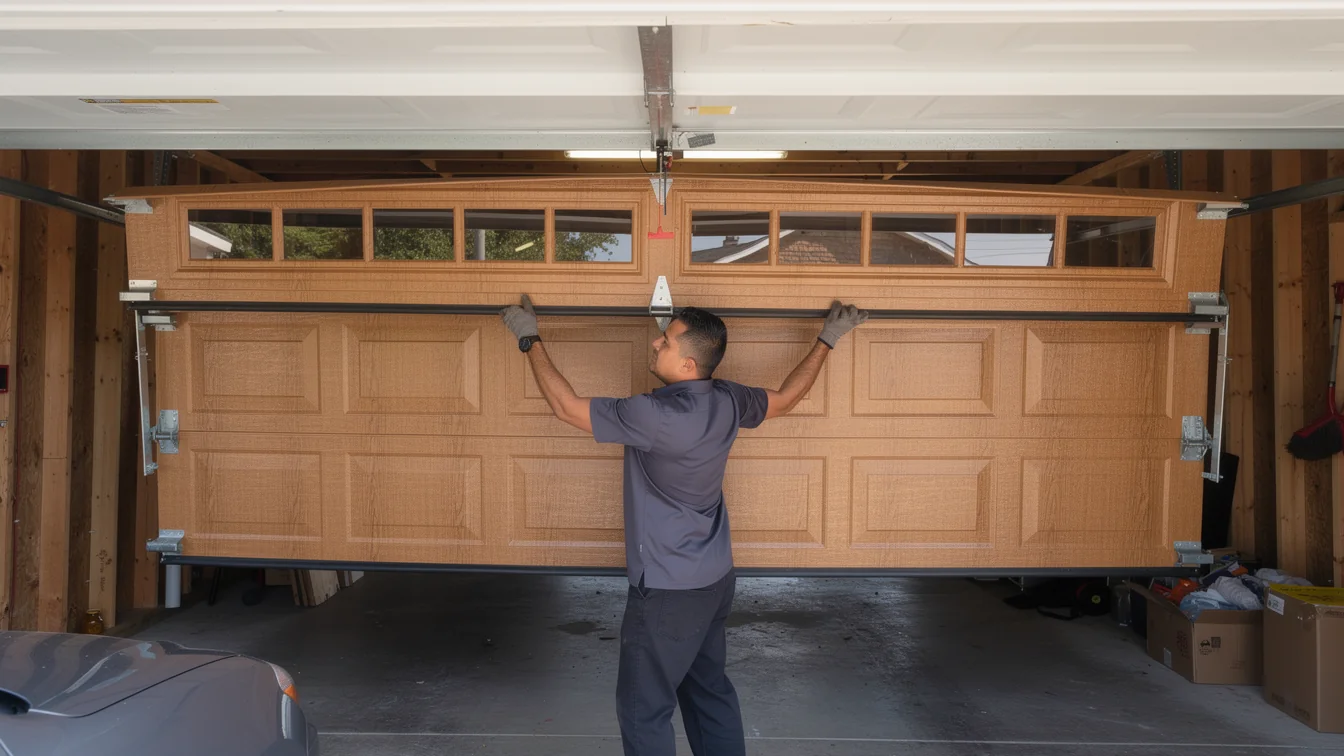
Most homeowners call about the symptom they can hear or see - a door that bangs on the way down, an opener that grinds. They want that part fixed first. A tech doesn't start there. Across this area the housing stock runs 1945 to 2008 with a median build year around 1980, and most of the 39 named neighborhoods we cover are 1980s-90s construction. That matters because a door that age has had one or two spring replacements already, often done at different times by different people, which means the hardware on the door frequently doesn't match the door itself - a newer torsion spring on an original track, or a retrofit opener bolted to a bracket sized for a lighter panel. Chasing the noise first means missing that mismatch, and fixing the symptom without finding it means the same call comes back in six months. The first ten minutes on any job here go to reading the age of each component against the others, not to the one that's making noise. That's slower than it looks, and it's also the only way to know if you're fixing the door or just patching the loudest part of it.
The Situation
This service area covers roughly 95,421 households, with about 51,218 of those owner-occupied houses - the kind of split where a tech sees a lot of long-term owners who've had the same door for twenty or thirty years, not rental turnover where doors get replaced on a schedule. Combined with the 1945-2008 build range, that means a technician working in Appleton and the surrounding towns - Kimberly, Little Chute, Combined Locks, Darboy, Kaukauna - is as likely to find a door that's original to the house as one that's been swapped. Those two situations get checked differently. An original door gets checked for the track and spring sizing that matched the house when it was built, since those parts have often drifted out of spec after decades of use. A replacement door gets checked against the opener it's paired with, since most replacements upgrade the door but leave the old opener in place, and that mismatch is one of the more common failure points we find.
What Local Conditions Do
The climate band here is cold and severe, and that shows up in specific places on a garage door, not everywhere at once. Steel panels contract in deep cold, which tightens tolerances at the rollers and can turn a slightly worn roller into a binding one overnight rather than gradually. Torsion springs lose a measurable amount of lift in cold temperatures, so a spring that was borderline in October can leave a door feeling heavy or uneven by January - that's a wear issue showing up as a seasonal one, and it gets misread as an opener problem more often than not. Lubricant also thickens in cold, which is why a tech checks the grease on tracks and hinges before assuming a motor issue. None of this is unique to one house; it's a function of the climate band this whole area sits in, and it's consistent enough that we check these same three points - rollers, spring tension, and lubricant condition - on nearly every winter call.
The Seasonal Bit
Before the cold sets in is the right time to check spring tension and roller wear, not after a door has already started sticking. We don't have a specific lead time to quote for parts here, and that's worth saying plainly: if a spring fails mid-winter and the replacement needs to be ordered, the door may sit out of service longer than anyone wants. That's the honest limitation - we can't promise same-day parts on every job, only on what's in the truck. What we can do is check the things cold weather hits hardest - spring tension, roller condition, and opener force settings - before the first hard freeze, which for the housing stock in this area usually means doors built or last serviced well before current cold-weather hardware became standard. A ten-minute seasonal check catches most of what turns into an after-hours call once the temperature drops.
Frequently asked questions
How often should I get my garage door checked in Appleton?
Once a year, ideally before winter, given the cold severe climate band this area sits in. Springs lose lift and rollers bind more in cold temperatures, so catching wear in fall is cheaper than an emergency call in January.
My house was built in the 1980s - does that matter for my door?
It can. A lot of the stock in this area dates to that era, and doors that old have usually had at least one spring or opener swap already. A tech checks whether the replaced parts actually match the original hardware before doing anything else.
Do you know how long parts will take if something breaks?
We don't quote a general lead time here since it depends on the part and what's in stock. We'll tell you straight when we know, rather than guess.
Why does my door feel heavier in winter?
Torsion springs lose some lift in cold weather, which is common in this climate band. A door that felt fine in October can feel noticeably heavier by midwinter even with no new damage - that's wear showing up as a seasonal symptom.
Related garage door services in Appleton
More garage door guides
Book garage door service in Appleton
Call now or request a quote - tell us what the door is doing and where you are.